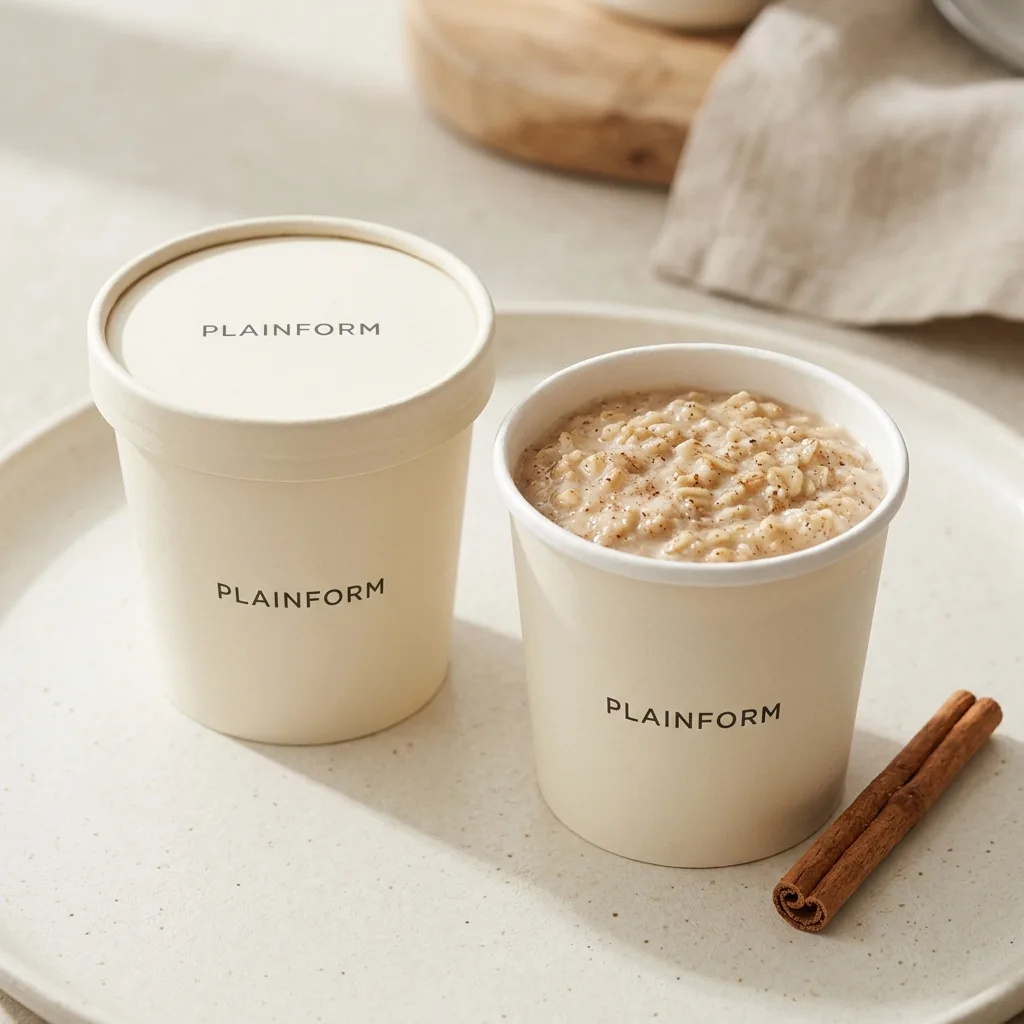
Dawnjar Sample
Protein Oatmeal Cups — Cinnamon
20g protein250 cal
8.0g protein / 100 cal
per serving · 1 cup (65g)
$23.99$4.00 / serving
Preview collection · Sample products · Prices in CAD
Dawnjar · High-protein recipes
Buckwheat porridge makes a change from oats: the groats can stay gently chewy or cook down into a softer, creamy bowl. Start with raw groats for a mild flavour or roasted kasha for a more toasted result, then choose milk or soy beverage and an addition such as Greek yogurt. These are adjustable home-kitchen methods, not tested nutrition formulas. Dawnjar remains a preview with sample records, illustrative figures and CAD prices; ordering opens at launch. The oatmeal reference below is not buckwheat inventory.
For a small starting batch, gather half a cup of raw buckwheat groats, roughly a cup of milk or soy beverage, cinnamon and a little maple syrup. Keep extra liquid nearby because groat size and the desired consistency change how much you need. These quantities are preparation suggestions, not serving recommendations or verified nutrition figures. Check the package for any specific rinsing and cooking directions before beginning.
Set aside plain Greek yogurt or your chosen protein powder for the finish rather than adding it at the start. A scoop is not a standard amount across packages, so begin with a modest measured addition and taste before adding more.
The phrase "buckwheat porridge" receives about 320 searches a month in Canada, per Semrush data pulled October 2026.
If the bottom starts sticking, lower the heat and move the spoon across the whole base. Do not scrape a scorched layer into the bowl. For smoother porridge, cook the groats a little softer within the package directions; for more texture, stop when they are tender but still distinct. Powder can thicken the mixture after stirring, so wait before adding another spoonful.
For an overnight option, rinse raw groats and cover them generously with water in a covered container in the refrigerator. The next morning, drain and rinse again, then cook with fresh milk or soy beverage according to the package instructions. Soaking can change the texture and cooking time, but it is not required for every groat package and does not establish that uncooked groats are ready to eat.
After cooking, finish with yogurt or dispersed powder as above. For a chilled breakfast, follow appropriate cooling guidance, refrigerate the cooked base and add toppings when serving. Do not leave milk and groats soaking on the counter. Keep ingredient labels available and make only the quantity you plan to use; this guide guarantees no storage period.
Greek yogurt adds tang and a thick finish; fold it through off the heat or spoon it on top. Powder is easier to disperse when mixed separately with a little cool liquid before meeting the porridge. Vanilla or another flavour can change the amount of cinnamon or maple you prefer. Read the exact powder directions, and do not assume that its dry serving describes the entire bowl.
Nut butter — Stir a small spoonful into the warm base for a richer texture, checking the named nut and other ingredients.
Hemp hearts — Scatter them over the finished bowl for a soft seed topping rather than cooking every addition together.
Eggs — For an egg version, whisk beaten egg with some warm porridge, return it to the pan and cook thoroughly following appropriate egg-cooking guidance; do not merely stir raw egg into a finished bowl.
Each addition changes the recipe and its label calculation. There is no universal protein amount for buckwheat porridge: record the actual groat, liquid and topping quantities if you are comparing preparations.
Try sliced pear with cinnamon, berries with yogurt, or banana with a little nut butter. Toasted seeds bring contrast to soft groats, while grated apple can be folded into a warm bowl. Keep crisp additions separate until the last moment. Add maple syrup after tasting the fruit and protein ingredient so sweetness does not become the only flavour.
For a savoury bowl, omit the syrup and use cooked mushrooms, herbs or a thoroughly cooked egg. Keep sweetened powder out of that version unless you specifically want its flavour. Change one component at a time when adjusting texture: extra liquid loosens the base, while more dry toppings do not fix an undercooked groat.
Buckwheat is a seed, not wheat; its name alone does not settle the finished package’s gluten wording. Read processing statements and any gluten-free claim on the actual bag. Health Canada considers foods made under good manufacturing practices with gluten not exceeding 20 ppm from cross-contamination to meet the intent of the gluten-free rule. This explains label conditions, not a claim about your groats or any Dawnjar sample.
Milk in yogurt, soy in a beverage, eggs in an egg version and peanuts or tree nuts in toppings need their own checks. Health Canada states that priority allergens must be identified by common name on pre-packaged food labels. Read ingredient lists, Contains statements and precautionary wording on every component rather than drawing conclusions from the word buckwheat.
Groat type — Identify raw groats, roasted kasha or a prepared mix; follow the directions for that format.
Declared portion — Keep dry groat weight beside its protein entry and read any prepared-table assumptions.
Added ingredients — Include the actual yogurt, powder, beverage and topping labels when assessing your preparation.
Package wording — Check gluten and allergen statements independently of the grain-like appearance.
For nutrients with a daily value, Health Canada explains: % DV: 5% DV or less is a little, 15% DV or more is a lot. Apply that aid to the declared portion, not to an invented bowl total.
The cinnamon oatmeal cup is an existing breakfast-format reference, not a buckwheat cup, groat package or tested porridge. Its illustrative figures and CAD price describe that sample only. The shelf demonstrates Dawnjar’s comparison presentation without establishing ingredient claims for this recipe.
Dawnjar Sample
20g protein250 cal
8.0g protein / 100 cal
per serving · 1 cup (65g)
$23.99$4.00 / serving
Preview collection · sample records with illustrative figures · prices in CAD. Ordering opens at launch.
Decide whether you want the mild raw-groat version or toasted kasha, then read preparation directions before choosing your finishing ingredient. Plan room for a separate topping container if taking the bowl elsewhere. A practical ingredient list distinguishes groats, liquid and finish instead of assuming a packaged mix already includes them.
Simmer rinsed groats with milk or soy beverage, then add yogurt or dispersed powder off the heat. Follow the groat package for cooking and adjust liquid until the texture suits you.
Not always; follow your groat package’s preparation directions. An overnight refrigerated soak is an optional preparation step before cooking, not a requirement for every format.
No, buckwheat is a seed, but check labels for cross-contact. Read any gluten-free wording on the finished package rather than assigning that status from its name. Health Canada’s gluten-free guidance addresses manufacturing and cross-contamination.
Use yogurt, protein powder, nut butter, hemp hearts or a thoroughly cooked egg addition. The amount depends on the specific ingredients and quantities; their own labels supply the relevant figures.
Raw groats have a milder flavour; roasted kasha gives a more toasted bowl. Read each package’s cooking directions because texture and timing can differ.
No; buckwheat is an editorial recipe topic, and Dawnjar is currently a preview. Sample records have illustrative figures and CAD prices, with ordering opening at launch.
Dawnjar preview pages use sample product records and illustrative nutrition figures. Ordering opens when real inventory and fulfillment are live. Nutrition information is general and informational only, not medical advice.